
Most guides treat eyebrow dandruff as an afterthought of scalp dandruff — same product, same routine, problem solved. It isn't that simple. The skin over your eyebrows is thinner than scalp skin, sits a few millimeters from your eyes, and doesn't tolerate the same concentration of product that works fine on your head.
Below is a physician's breakdown of what's actually causing the flaking in and around your eyebrows, which common fixes help or hurt, and the treatment approach that holds up near sensitive periocular skin — without the guesswork.
"The mechanism behind eyebrow dandruff is usually the same yeast overgrowth that drives scalp dandruff. What changes isn't the cause — it's what's safe to put on skin six millimeters from your cornea."
— Dr. Deepak Khanna DOHere's how the remedies people reach for first actually hold up, starting with what to keep away from your eyes.
Do These Common
Fixes Work?
Plucking or Picking Out the Flakes
Removing visible scale by hand does nothing to reduce the yeast overgrowth or inflammation underneath it, and repeated picking at hair follicles raises the risk of local skin breakdown and, occasionally, secondary infection.
Regular Dandruff Shampoo, Applied Undiluted
Many active ingredients target the same yeast that's likely driving the flaking, but shampoos are formulated and tested for scalp skin, not the thinner skin bordering the eyes. Full-strength contact here risks real irritation — or worse, if it runs into the eyes.
Petroleum Jelly
It moisturizes, but does nothing to reduce yeast overgrowth, and a heavy occlusive layer can trap oil against the skin the same way other oils do — potentially prolonging a flare instead of shortening it.
Diluted Apple Cider Vinegar
The acidity can modestly disrupt surface yeast, similar to its effect on the scalp, but skin bordering the eyes is far more sensitive to acidity, and accidental eye contact is a genuine risk here, not just an inconvenience.
Waxing or Threading During an Active Flare
Physically stressing already-inflamed, barrier-compromised skin tends to trigger a worse flare-up rather than clear one, and can spread irritation to a wider area of the brow and surrounding skin.
A Pea-Sized Dab of 1% Hydrocortisone
Short courses — generally under two weeks — genuinely reduce the inflammation driving redness and itch. But this is a real medication, not a home remedy, and prolonged use this close to the eyes carries a documented risk of skin thinning and elevated eye pressure.
The Three
Usual Suspects
Eyebrow flaking can come from more than one direction, and the treatment logic changes depending on which one you're actually dealing with.
Why It Keeps
Coming Back
These four mechanisms explain why eyebrow flaking so often returns even after a scalp routine seems to be working.
Yeast Overgrowth Doesn't Stay on the Scalp
Malassezia lives across any sebaceous-gland-dense skin, not just the scalp. Eyebrows, the sides of the nose, and behind the ears are common sites — which is why treating the scalp alone often leaves the brows untreated.
The Skin Barrier Here Is Thinner
Periocular and brow skin is measurably thinner than most scalp or facial skin, which means it loses moisture faster, reacts more readily to irritants, and takes longer to calm down once a flare has started.
Product Buildup Compounds the Problem
Brow gel, pencil, and tinting residue left on overnight accumulates at the follicle openings, which can irritate the skin directly and create a favorable environment for continued yeast overgrowth.
Grooming Habits Add Physical Trauma
Frequent plucking, threading, or waxing over inflamed skin re-injures a barrier that hasn't finished repairing from the last flare — a common reason eyebrow dandruff cycles instead of resolving.
Eyebrow dandruff usually isn't a separate condition from scalp dandruff — it's the same yeast overgrowth showing up on different skin. Treating one site and ignoring the other typically means the untreated one keeps re-seeding the one you're trying to clear.
Mistakes That Come
From Treating It Like Scalp Skin
- →Using scalp shampoo at full strength this close to the eyes — a concentration that's fine on the scalp can genuinely irritate, or worse, skin this near the cornea.
- →Treating eyebrow flaking and scalp flaking as unrelated — if both are present, treating only one site often means the untreated one keeps reintroducing yeast to the other.
- →Using a steroid cream without a stop date — hydrocortisone works, but periocular skin thins with prolonged steroid exposure in a way that isn't easily reversible.
- →Continuing brow makeup through an active flare — pencils, gels, and tinting dye all add product buildup and potential irritants right where the skin is trying to heal.
- →Assuming any brow flaking is dandruff — persistent scaling right at the lash line, especially with crusting or lash loss, can signal blepharitis or another condition that needs a different treatment entirely.
Common Questions
What Actually Works,
Applied Carefully
- —Check whether your scalp is also affected, and treat both sites if so. Treating one and ignoring the other is a common reason eyebrow flaking keeps coming back.
- —Dilute before applying anything near the eyes. A diluted, brief-contact approach is safer than full-strength product this close to the eyes.
- —Pause brow cosmetics during an active flare. Pencils, gels, and tinting products all add potential irritants to skin that's trying to calm down.
- —Set a stop date on any steroid cream. Use it to get the inflammation under control, then shift to a gentler maintenance routine.
- —See a physician if scaling concentrates at the lash line, causes lash loss, or doesn't improve after three to four weeks. That pattern often means it isn't straightforward seborrheic dermatitis.
of the Same Problem.
Eyebrow dandruff usually travels with scalp seborrheic dermatitis. DandRX's fragrance-free, sulfate-free shampoo targets that yeast overgrowth at the source. It's formulated for the scalp, not for use near the eyes — check with a physician before applying any scalp product to the eyebrow area.
Medical Disclaimer: This content is for general educational purposes only and does not constitute medical advice, and is not a substitute for an in-person evaluation. Given the proximity to the eyes, use particular caution with any product applied near the eyebrows or eyelids, and discontinue use and consult a physician immediately if you experience eye irritation, vision changes, or pain. It does not endorse or guarantee outcomes for any specific product. If symptoms persist, worsen, or spread beyond the eyebrow area, please consult a licensed physician or board-certified dermatologist. Visit dandrx.com for more information about DandRX products.
Medically Reviewed By
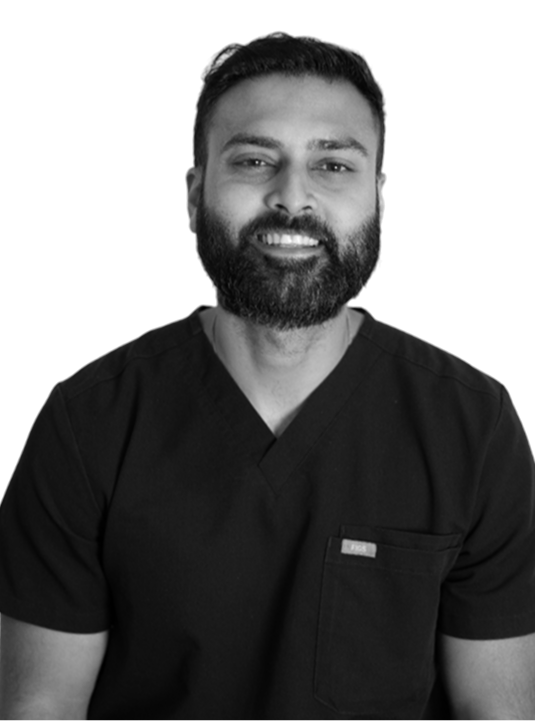
Dr. Khanna is a distinguished family medicine physician who brings a wealth of expertise by offering insightful and practical advice on a wide range of health concerns related to hair loss and dandruff. His experience in primary care gives him in-depth knowledge on managing common dermatological issues, including dandruff. Understanding the interplay between skin health, lifestyle factors, and medical conditions allows him to provide effective treatment strategies, from recommending medicated shampoos to addressing underlying causes such as seborrheic dermatitis or fungal infections. He provides a valuable resource for both patients and healthcare professionals, reinforcing the importance of comprehensive, patient-centered care.


