
If you have seborrheic dermatitis, chances are you've noticed more hair in the drain — and wondered whether the two are connected. This question comes up in almost every patient conversation about scalp health.
The short answer: seborrheic dermatitis does not directly destroy hair follicles. But the relationship between SD and hair shedding is real and worth understanding clearly.
"Seborrheic dermatitis does not cause permanent hair loss on its own. But an inflamed, unhealthy scalp is not an optimal environment for hair growth — and the shedding patients experience is often very real."
— Dr. Deepak Khanna DOHere is what the evidence shows, and what it means for your scalp.
Four Questions.
Four Direct Answers.
Does seborrheic dermatitis cause permanent hair loss?
Seborrheic dermatitis does not permanently damage or destroy hair follicles. Unlike conditions such as scarring alopecia (lichen planopilaris) or discoid lupus, SD does not cause irreversible follicle destruction. Hair loss that occurs during an SD flare is almost always temporary and resolves when the inflammation is properly treated. The follicles remain intact and capable of regrowth.
Can seborrheic dermatitis cause hair shedding?
Yes. Scalp inflammation disrupts the normal hair growth cycle. Chronic or severe SD creates an environment of persistent inflammation around the follicle, which can push hairs from the active growth phase (anagen) into the resting and shedding phase (telogen) prematurely — a process called telogen effluvium. Additionally, itching and scratching from SD can mechanically dislodge hairs and damage the follicle opening, contributing to visible shedding. This shedding is real, but it is not the same as permanent hair loss.
Will treating SD restore lost hair?
In most cases, yes — if the hair loss is primarily inflammation-driven. When seborrheic dermatitis is effectively treated and the scalp returns to a healthy, low-inflammation state, the hair growth cycle normalizes and shedding reduces. Regrowth typically follows within several months. However, if a patient also has androgenetic alopecia (pattern hair loss) or another underlying cause running concurrently, treating SD alone will not reverse that separate condition. It's important to distinguish between SD-associated shedding and independent hair loss disorders.
Can SD and androgenetic alopecia occur together?
Yes, and this is clinically important. Both conditions are more common in individuals with higher androgen sensitivity, and they often co-occur — particularly in men. Malassezia yeast has also been studied as a potential contributor to scalp inflammation in the context of pattern hair loss, though the relationship is still being investigated. When both conditions are present, treating SD actively is still important — an inflamed scalp worsens the environment for already-miniaturizing follicles. But patients should understand they are dealing with two distinct processes requiring appropriate management for each.
The key question is whether hair loss is temporary shedding (telogen effluvium from scalp inflammation) or progressive follicle miniaturization (androgenetic alopecia). Seborrheic dermatitis can cause the former. It does not cause the latter — but it can make it worse.
How Scalp Inflammation
Affects Hair Growth
To understand why an inflamed scalp leads to shedding, it helps to understand the normal hair growth cycle — and where inflammation interferes.
The Hair Growth Cycle
Active hair growth. Lasts 2–6 years. 85–90% of scalp hairs are in this phase at any time. Inflammation can shorten or interrupt this phase prematurely.
Hair stops growing and detaches from its blood supply. Lasts about 2–3 weeks. Affects roughly 1% of hairs at a time.
Hair rests before shedding. Lasts 3–4 months. Scalp inflammation pushes hairs here early — causing increased shedding known as telogen effluvium.
The resting hair sheds and the follicle begins a new anagen cycle. Normal: 50–100 hairs per day. SD-related shedding can significantly exceed this.
Chronic scalp inflammation — from untreated SD — creates a hostile environment around the follicle. Elevated inflammatory cytokines, oxidative stress, and mechanical irritation from scratching collectively disrupt the cycle. The result is more hairs pushed into telogen simultaneously, and a visible increase in shedding over the following weeks.
Why Treating SD
Protects Your Hair
Antifungal treatment addresses the root cause of the inflammation — Malassezia yeast overgrowth. When yeast levels are controlled, the inflammatory response resolves, the scalp environment normalizes, and the hair cycle can return to its proper rhythm. There are several mechanisms at work:
Reducing Perifollicular Inflammation
Antifungal agents like Pyrithione Zinc suppress Malassezia colonization, which directly reduces the inflammatory signals surrounding the follicle. Less inflammation means fewer hairs being forced into the resting phase prematurely.
Eliminating the Itch-Scratch Cycle
Effective treatment reduces itching, which breaks the mechanical damage cycle. Scratching an inflamed scalp dislodges telogen hairs, disrupts the follicle opening, and creates microtrauma that worsens inflammation. Controlling SD stops this self-perpetuating cycle.
Restoring the Scalp Barrier
SD disrupts the skin barrier, increasing trans-epidermal water loss and oxidative stress on follicle cells. A conditioner that supports barrier repair — used alongside antifungal shampoo — helps restore the lipid layer and reduce follicle-level oxidative damage.
Preventing Cumulative Damage
Each unmanaged flare contributes to cumulative scalp inflammation. Over years of repeated flares and inadequate treatment, the chronic inflammatory burden on follicles increases. Consistent maintenance treatment prevents this accumulation — even during asymptomatic periods.
Active Ingredients That Address Both SD and Scalp Health
DandRX uses 2% Pyrithione Zinc — double the concentration of standard OTC dandruff shampoos — alongside plant stem cell extracts that help protect follicle cells from oxidative stress. The paired conditioner supports barrier repair after antifungal cleansing.
When to See
a Physician
Most SD-related shedding resolves with consistent antifungal treatment. However, some presentations warrant professional evaluation to rule out concurrent hair loss conditions or ensure proper diagnosis.
- →Shedding is severe or accelerating — if you are losing dramatically more than 100 hairs per day consistently, a physician can assess whether something beyond SD is contributing.
- →Visible scalp thinning or recession — SD does not cause visible scalp show-through or receding hairlines. If you are seeing these, pattern hair loss may be co-occurring and should be evaluated.
- →Patches of complete hair loss — patchy alopecia areata (an autoimmune condition) can occasionally mimic SD or occur alongside it. Diagnosis requires clinical examination.
- →Scarring, permanent-feeling bald spots, or significant scalp pain — these are not features of SD and suggest a different or additional diagnosis requiring urgent dermatological evaluation.
- →No response to antifungal treatment after 6–8 weeks — persistent, severe, or treatment-resistant presentations should be assessed by a dermatologist to confirm diagnosis and rule out psoriasis, contact dermatitis, or other conditions.
Seborrheic dermatitis is a manageable condition. The hair shedding it causes is reversible with effective treatment. The greatest risk to long-term scalp health is not the condition itself — it is leaving it consistently undertreated and allowing chronic inflammation to accumulate over time.
Common Questions
A Consistent
Scalp Routine
For patients experiencing both seborrheic dermatitis and hair shedding, a consistent routine is the most important variable. Here is what evidence supports:
- —Antifungal shampoo, at least twice weekly. Use a 2% Pyrithione Zinc, ketoconazole, or selenium sulfide shampoo. Leave it on the scalp for 2–5 minutes before rinsing to allow the active ingredient to work.
- —Follow with a barrier-repair conditioner. Antifungal shampoos cleanse thoroughly — a nourishing conditioner restores moisture and supports the scalp barrier. The DandRX Shampoo + Conditioner system is designed to work in sequence.
- —Don't stop when flares clear. Maintenance between flares is essential. Stopping treatment when symptoms resolve allows Malassezia to repopulate and inflammation to rebuild — often triggering the next flare within weeks.
- —Avoid harsh styling products on an inflamed scalp. Alcohols, fragrances, and occlusive heavy pomades worsen scalp barrier disruption and create an environment where Malassezia thrives.
- —Manage stress actively. Stress is one of the most reliable triggers for SD flares — and therefore for the secondary shedding that follows. Sleep, exercise, and stress reduction all have real downstream effects on scalp inflammation.
- —Seek evaluation if shedding is disproportionate. If hair loss seems beyond what SD alone would explain, a dermatologist can assess for concurrent androgenetic alopecia, alopecia areata, or nutritional deficiencies.
Stronger Hair.
Physician-formulated with 2% Pyrithione Zinc and plant stem cells. Fragrance-free. Sulfate-free. Backed by a 30-day guarantee.
Medical Disclaimer: This content is for general educational purposes only and does not constitute medical advice. Hair loss has many potential causes. If you are experiencing significant or worsening hair shedding, please consult a licensed physician or board-certified dermatologist for diagnosis and personalized treatment. Visit dandrx.com for more information about DandRX products.
Medically Reviewed By
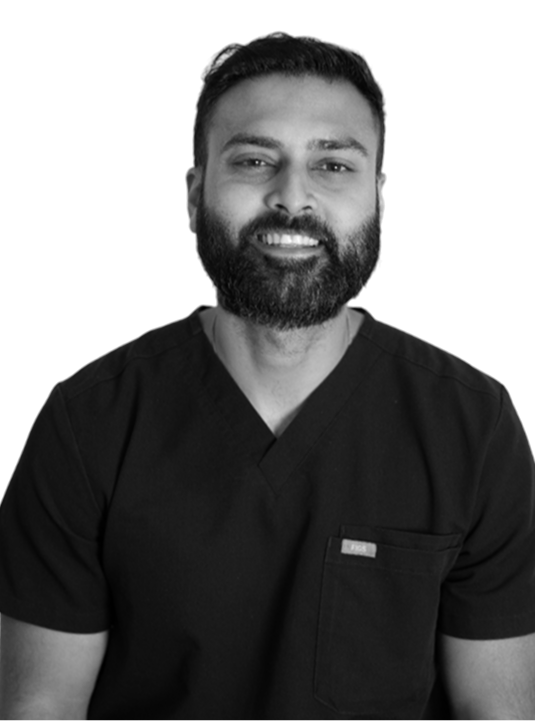
Dr. Khanna is a distinguished family medicine physician who brings a wealth of expertise by offering insightful and practical advice on a wide range of health concerns related to hair loss and dandruff. His experience in primary care gives him in-depth knowledge on managing common dermatological issues, including dandruff. Understanding the interplay between skin health, lifestyle factors, and medical conditions allows him to provide effective treatment strategies, from recommending medicated shampoos to addressing underlying causes such as seborrheic dermatitis or fungal infections. He provides a valuable resource for both patients and healthcare professionals, reinforcing the importance of comprehensive, patient-centered care.


