
Dandruff does not look the same on everyone. While the underlying process—scalp inflammation often driven by Malassezia yeast—is similar, the visible signs can vary significantly depending on skin tone, hair type, and scalp oil production. Understanding these differences helps with earlier recognition and appropriate treatment.
Light Skin Tones

On lighter skin tones, dandruff typically appears as classic white or pale yellow flakes. These flakes are often easy to see on dark clothing and along the hairline. Associated redness or pink patches on the scalp are usually quite visible, especially in more inflammatory forms like seborrheic dermatitis. Because contrast is high, dandruff in lighter skin is often noticed early.
Medium Skin Tones

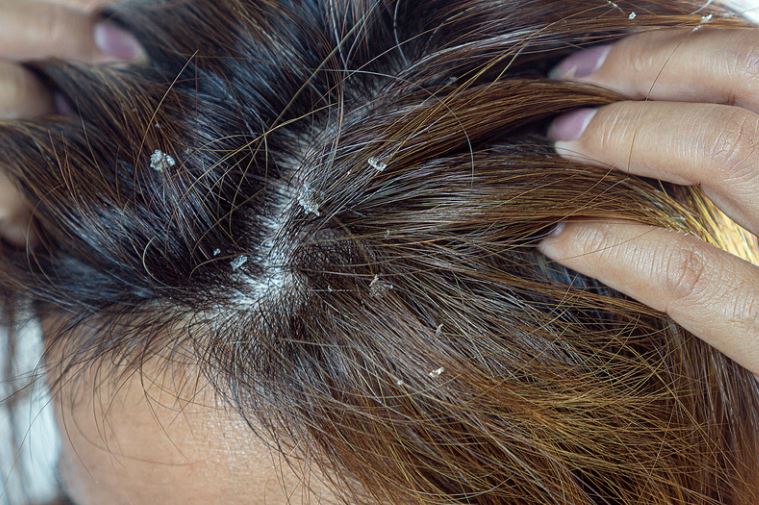
In medium skin tones, dandruff flakes may appear off-white, grayish, or slightly yellow. Redness may be subtler and sometimes overlooked, presenting instead as a faint discoloration or mild irritation. Scaling can blend more into the scalp, leading some people to underestimate severity until flaking becomes more pronounced.
Dark Skin Tones
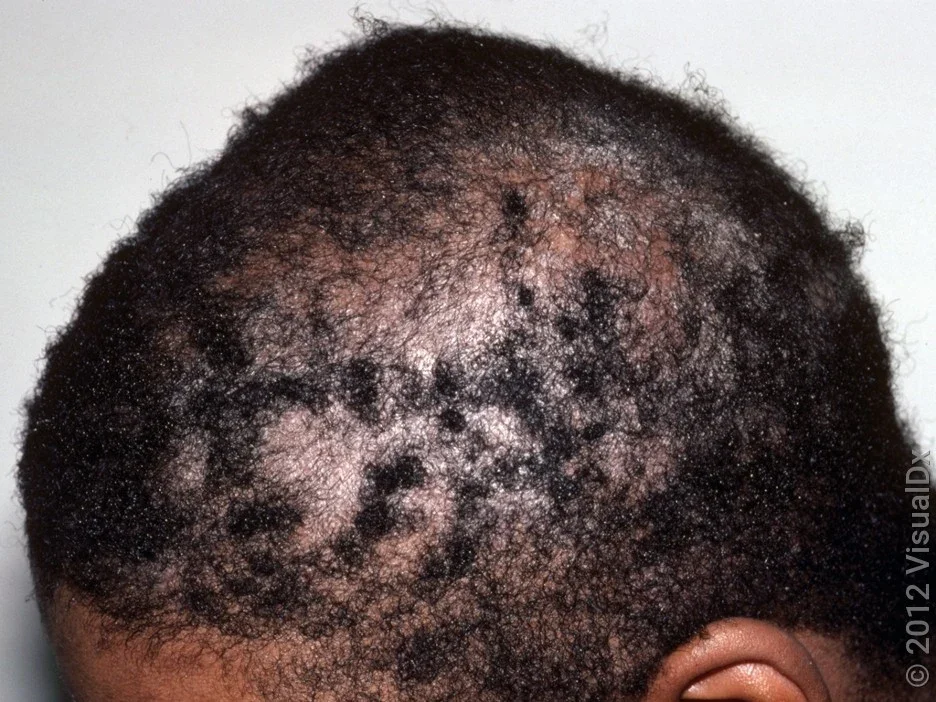
In darker skin tones, dandruff often appears as gray, white, or even chalky flakes that contrast sharply against hair and scalp. Redness is frequently less obvious and may appear dark brown, purple, or ashy rather than pink or red. Because inflammation can be harder to detect visually, dandruff in darker skin is sometimes misdiagnosed as simple dryness, delaying effective treatment.
Medically Reviewed By

Dr. Khanna is a distinguished family medicine physician who brings a wealth of expertise by offering insightful and practical advice on a wide range of health concerns related to hair loss and dandruff. His experience in primary care gives him in-depth knowledge on managing common dermatological issues, including dandruff. Understanding the interplay between skin health, lifestyle factors, and medical conditions allows him to provide effective treatment strategies, from recommending medicated shampoos to addressing underlying causes such as seborrheic dermatitis or fungal infections. He provides a valuable resource for both patients and healthcare professionals, reinforcing the importance of comprehensive, patient-centered care.


